Berlin's Coffee Culture: Where the City Learned to Slow Down

There was a time when ordering coffee in Berlin was a fairly straightforward affair. You found a café, ordered a Kaffee, perhaps added a piece of cake, and got on with your day. Nobody expected the barista to explain the altitude at which the beans had grown, the farmer who had harvested them or why the coffee tasted faintly of apricot.
Things have changed. Today, in certain Berlin cafés, choosing a coffee can involve a small conversation about origin, processing and extraction. A barista might recommend a light-roasted Ethiopian coffee prepared as a filter, while the person behind you orders an oat-milk flat white without looking up from a laptop. Both seem perfectly at home.
Berlin's third-wave coffee movement has helped turn this everyday drink into something more considered. Yet the city's appeal lies in the fact that coffee here is rarely just about what is in the cup. It is also about the rooms in which people drink it, the neighbourhoods around them and the particular Berlin talent for making ordinary life feel a little less ordinary.
From caffeine to craft
The third wave of coffee treats coffee more like a carefully sourced agricultural product than a standardised commodity. Attention shifts towards the origin of the beans, the work of the producer, the roasting process and the way a particular coffee is brewed. Espresso remains important, but it shares the counter with pour-over, batch brew and other methods that allow the character of the beans to come through.
Berlin proved fertile ground for this approach. The city already had an independent streak, an international population and a creative culture that was comfortable questioning established conventions. Its cafés did not need to look like traditional European coffeehouses. They could occupy former workshops, sit behind unassuming shopfronts or furnish an old building with little more than wooden tables, good lighting and a carefully chosen coffee machine.
A few pioneering roasters helped establish the scene. Bonanza Coffee began in Berlin in 2006, while The Barn and Five Elephant emerged around 2010, helping bring specialty roasting and more transparent sourcing into the city's everyday coffee culture. Their influence extended beyond their own counters, as the idea of treating coffee with the same attention given to wine or food became increasingly familiar.
But the most interesting thing about Berlin's coffee culture is that it has not developed into a single, uniform style. Some cafés are precise and almost contemplative, encouraging you to concentrate on the coffee itself. Others are busy neighbourhood meeting places where brunch, conversation and a second cup matter just as much as the beans.
There is room for both. Fortunately, there is also room for cake.
The cafés that tell the story
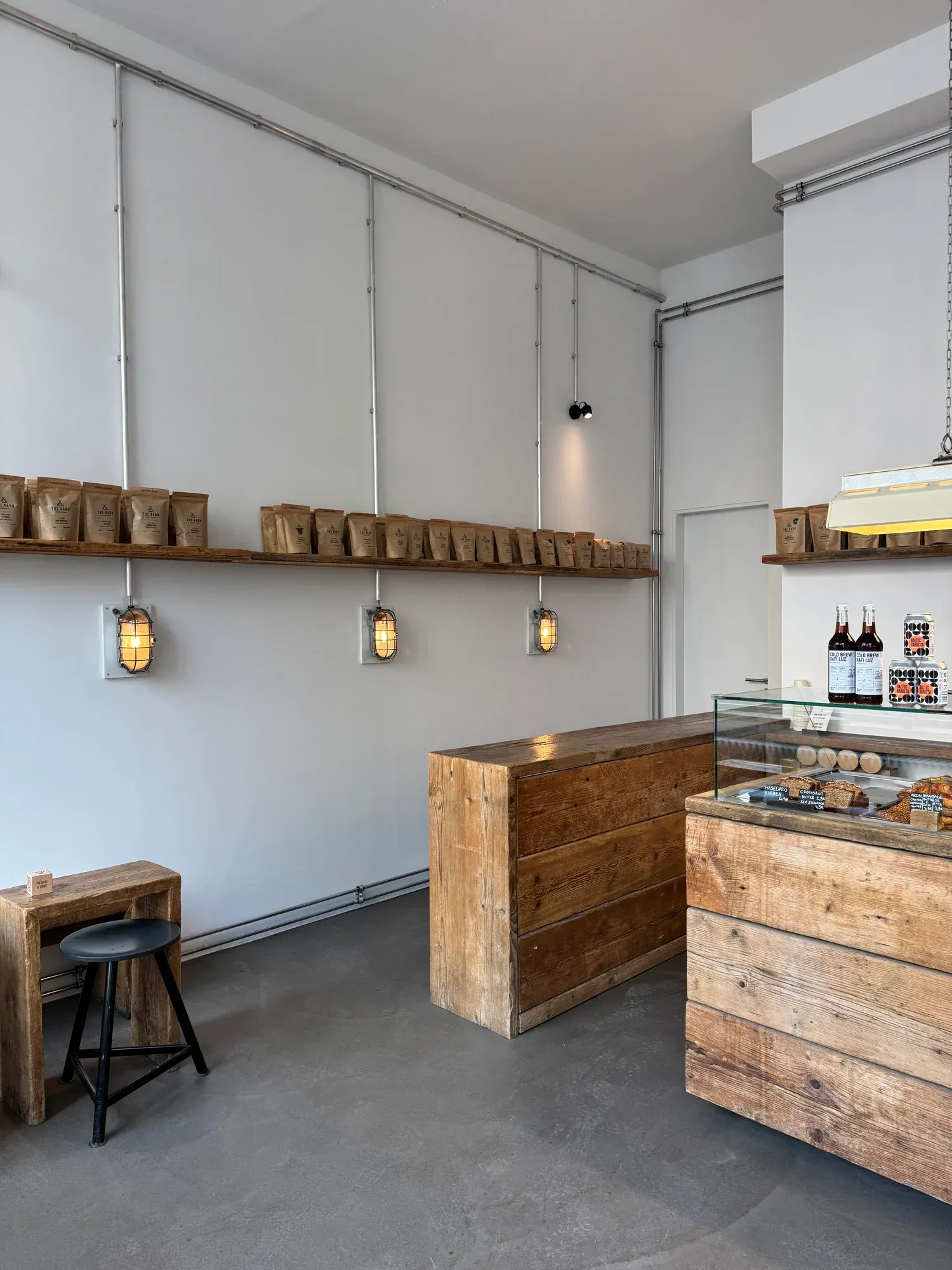
In Mitte, The Barn represents the more exacting side of specialty coffee. Founded by Ralf Rüller in 2010, the company became known for its focus on carefully sourced beans, lighter roasting and precise brewing. Its café on Auguststraße is a useful place to begin if you want to understand why Berlin became such an important name in European specialty coffee. Order a filter coffee or ask what single origin is being served, then take a moment to notice how much flavour can come from a cup without milk or sugar.
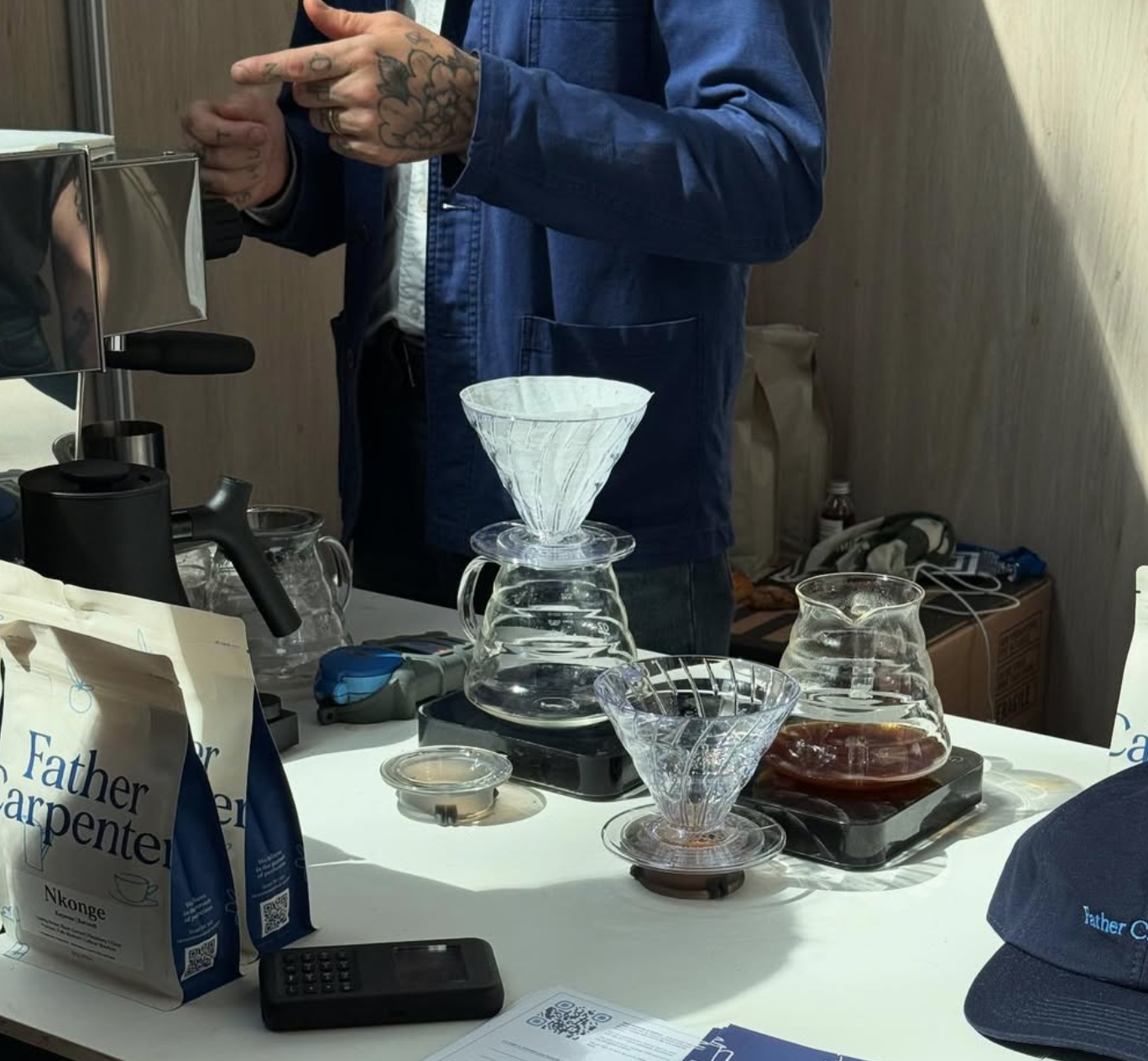
A short walk away, Father Carpenter offers a different experience. Tucked into a courtyard near Münzstraße, it combines specialty coffee with a relaxed setting that makes staying for breakfast or brunch an appealing prospect. It is the sort of place where a quick coffee can become a longer morning, especially if you have nowhere particularly urgent to be. The courtyard also provides a welcome reminder that Berlin often hides its best spaces behind buildings that look rather unpromising from the street.
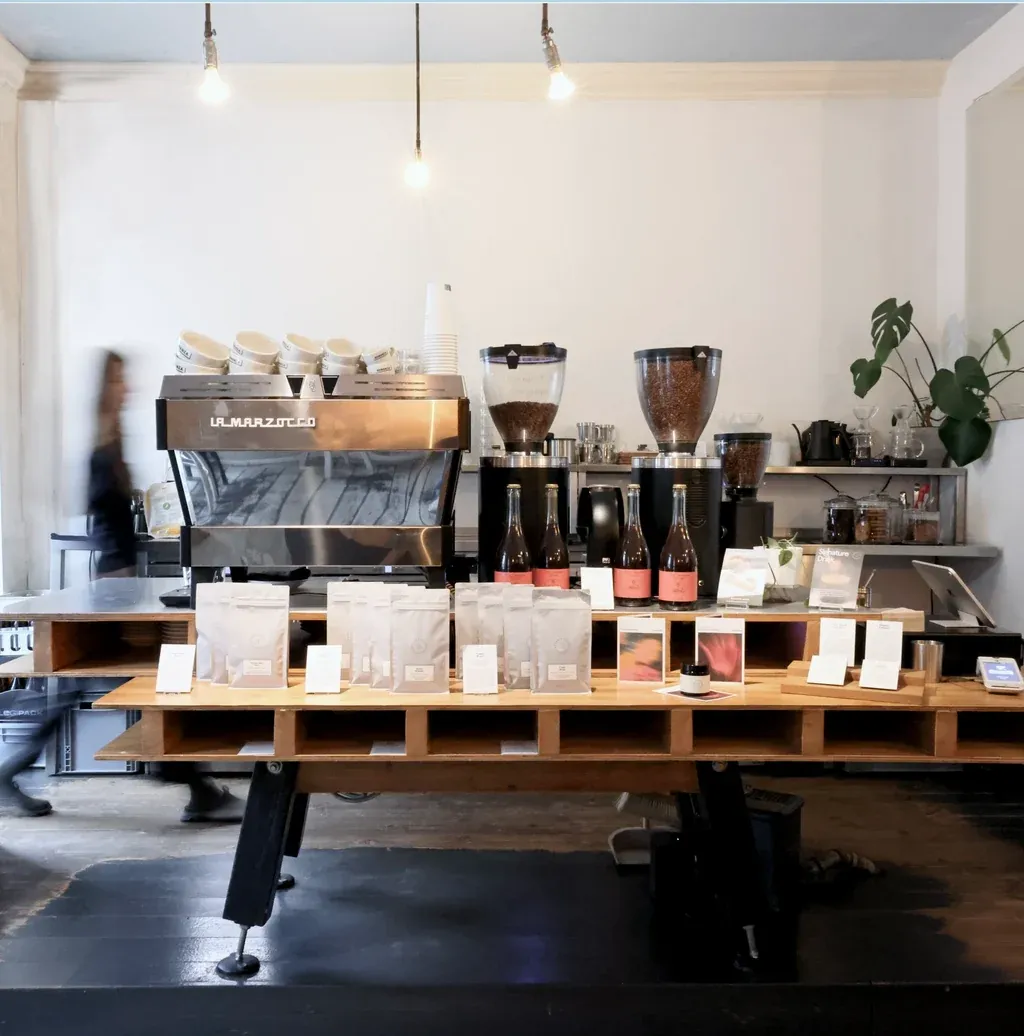
For a more direct connection to the city's roasting history, head towards Kreuzberg and Bonanza Coffee Roasters on Adalbertstraße. Bonanza was among Berlin's early specialty pioneers, and its approach helped establish the city's reputation for serious coffee without the formal atmosphere sometimes associated with it. The café is a good place to explore the difference between a well-made espresso and a carefully prepared filter. You need not develop an elaborate vocabulary to enjoy either. Knowing what you like is a perfectly respectable form of expertise.
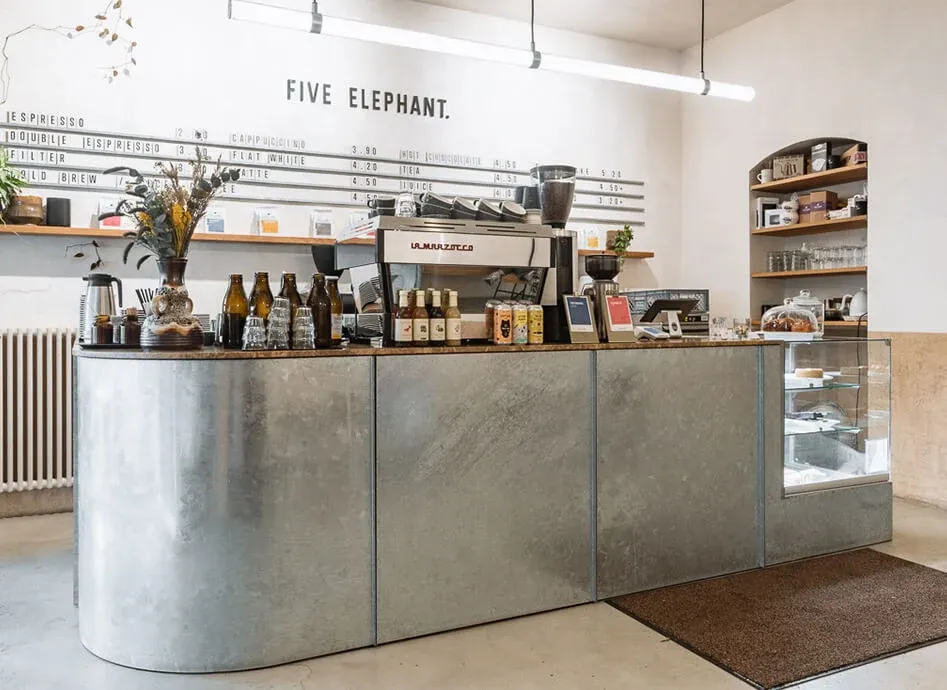
Then there is Five Elephant, whose reputation extends beyond its coffee to its cheesecake. The combination feels entirely appropriate for Berlin: a serious approach to one part of the experience, balanced by the very human realisation that a good afternoon is improved by something sweet. The Mitte location on Alte Schönhauser Straße is convenient for a coffee break between shops and galleries; the original Kreuzberg setting is worth considering if you are exploring the neighbourhood more widely. Five Elephant's appeal is precisely that it does not require you to choose between appreciating the coffee and enjoying the café as a place to spend time.
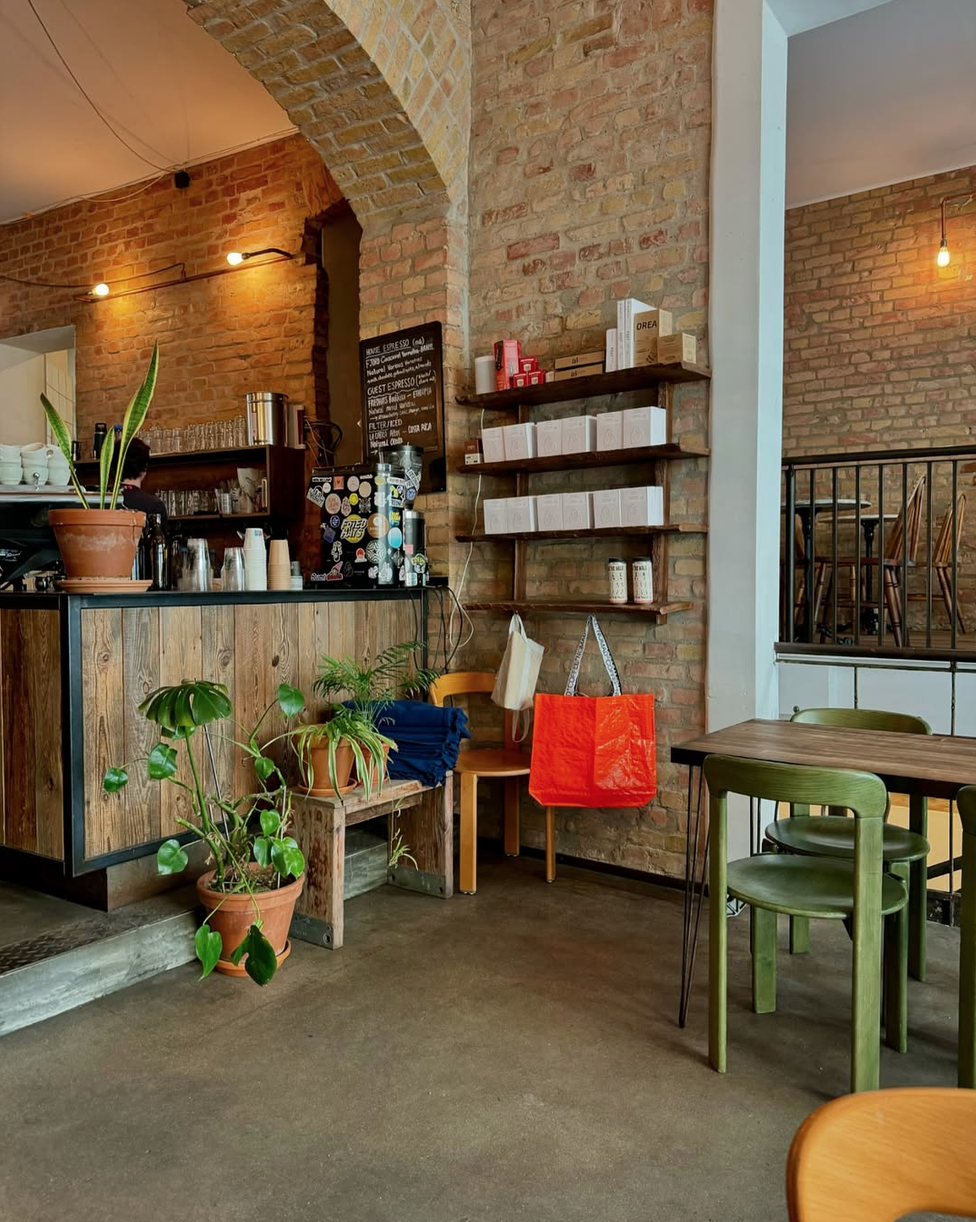
Finally, Distrikt Coffee on Bergstraße is a good choice when coffee is only one part of the plan. Known for its brunch offering as well as its drinks, it attracts people who want to sit down properly rather than collect a cup and disappear. This is an important distinction in a city where cafés often double as informal offices, meeting rooms and places to recover from the previous evening. A table, a decent breakfast and a well-made coffee can be a perfectly adequate itinerary.
None of these places represents the whole of Berlin. That is part of the pleasure. The city's coffee culture is not a polished circuit of identical interiors, but a collection of different attitudes towards the same daily ritual.
The neighbourhood is part of the flavour
Berlin's cafés make the most sense when you explore them on foot. Mitte is a natural starting point, with established roasters, design-conscious spaces, galleries and small shops close enough to combine in a morning. Kreuzberg feels more rooted in the independent culture that helped the specialty scene develop, while neighbourhoods such as Neukölln offer a more exploratory experience, with smaller cafés and changing local businesses.
The best approach is not to turn the city into a checklist. Choose one or two cafés, walk between them and leave time for whatever catches your attention. A bakery might interrupt the plan. A second-hand bookshop might take half an hour. You might find yourself sitting outside watching bicycles, dogs and delivery vans compete for the same stretch of pavement.
This is where Berlin's coffee culture becomes more than a story about better beans. The cafés are part of the city's social infrastructure. They give freelancers somewhere to work, friends somewhere to meet and solo travellers a way to feel briefly less like visitors. They also offer a useful measure of a neighbourhood: whether people arrive in a hurry, settle in for an hour or return often enough to be recognised.
Good coffee helps, of course. But a café that makes you want to come back usually gets several other things right: the light, the music, the chairs, the welcome and the sense that nobody is trying to hurry you out simply because you have finished your drink.
A better kind of coffee break
There is a temptation, with specialty coffee, to make everything sound more complicated than it needs to be. We can talk about processing methods, tasting notes and extraction ratios until a simple pleasure begins to resemble an examination. Berlin has its share of serious coffee enthusiasts, but the city also understands that a good café should be enjoyable even if you cannot distinguish a washed coffee from a natural one.
You can order a cappuccino. You can add sugar. You can choose the cake. Nobody needs to turn breakfast into a performance of taste.
Perhaps the real achievement of Berlin's third-wave cafés is that they have made people pay attention to something they were already doing. Coffee has become a small daily opportunity to notice the work behind an ordinary object: the farmer, the roaster, the person preparing it and the room in which it is enjoyed.
The best cup may be the one that introduces you to a flavour you have never noticed before. Or it may be the one you drink while talking to an old friend, with no idea what the beans are called.
Berlin has room for both kinds of morning. And that, more than any particular roasting philosophy, is what makes its coffee culture worth exploring.
Away from the noise.
Only the content that interests you, away from the noise and calm. Subscribe to our curated newsletter.

