How FREITAG Turns Old Truck Tarpaulins into Designer Bags
A used truck tarpaulin is not the sort of material most people associate with a designer bag. It spends its working life exposed to rain, road dirt and the occasional encounter with a low-hanging branch. Once it has reached the end of its time on the road, its next destination would...
A used truck tarpaulin is not the sort of material most people associate with a designer bag. It spends its working life exposed to rain, road dirt and the occasional encounter with a low-hanging branch. Once it has reached the end of its time on the road, its next destination would ordinarily be disposal. Yet in Zurich, Switzerland, an old tarpaulin can begin a rather different journey, eventually becoming a bag that costs several hundred euros.
This is the idea behind FREITAG, the Swiss bag brand founded in 1993 by brothers Markus and Daniel Freitag. Living in Zurich and cycling through the city's often unpredictable weather, the two graphic designers wanted a durable, waterproof messenger bag. Watching trucks pass their apartment gave them an idea: why not use the heavy-duty tarpaulins covering the loads? They added discarded bicycle inner tubes and old car seat belts, creating a bag designed for everyday urban life. The result became the starting point for a business built around upcycling, distinctive materials and functional design.
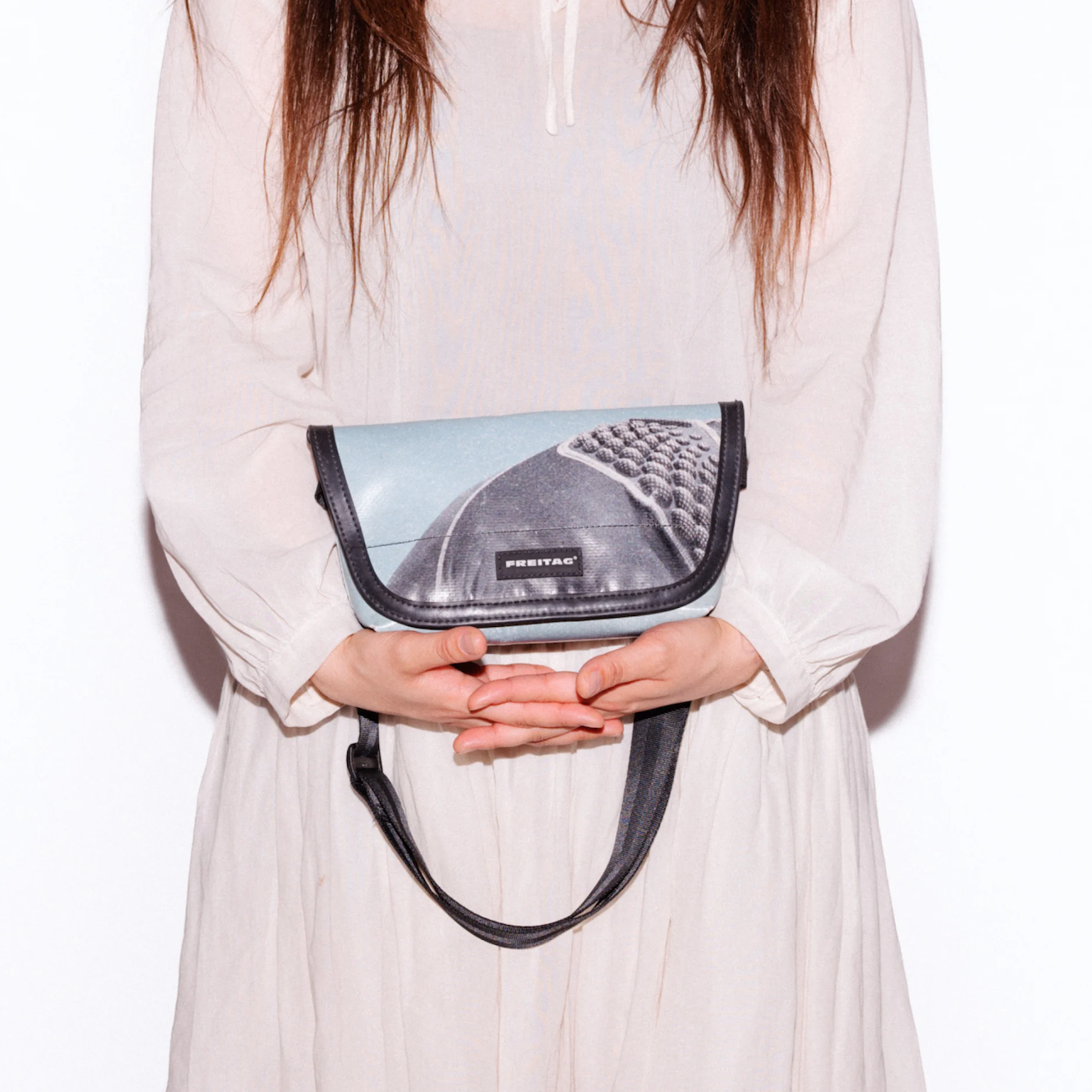
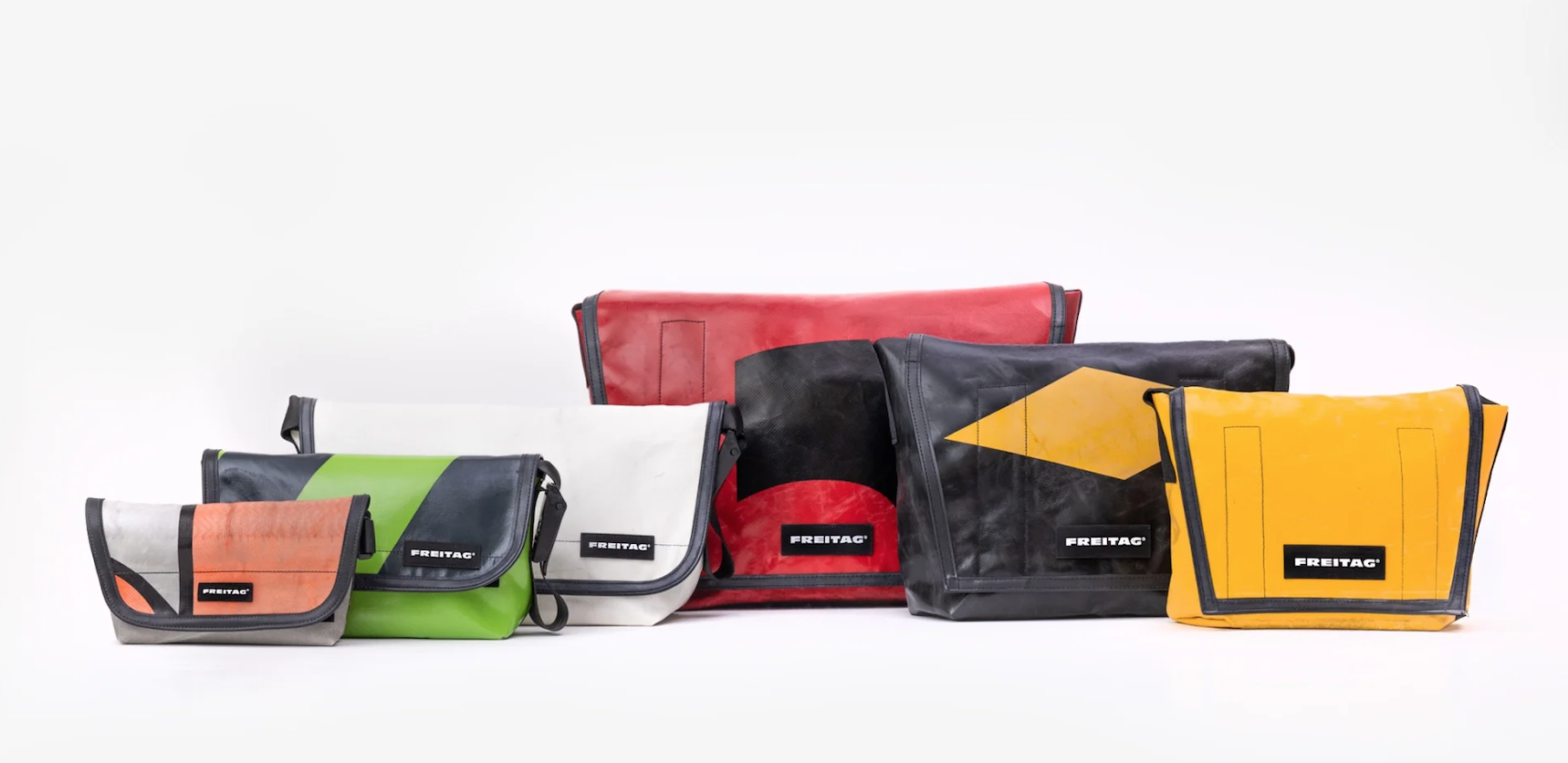
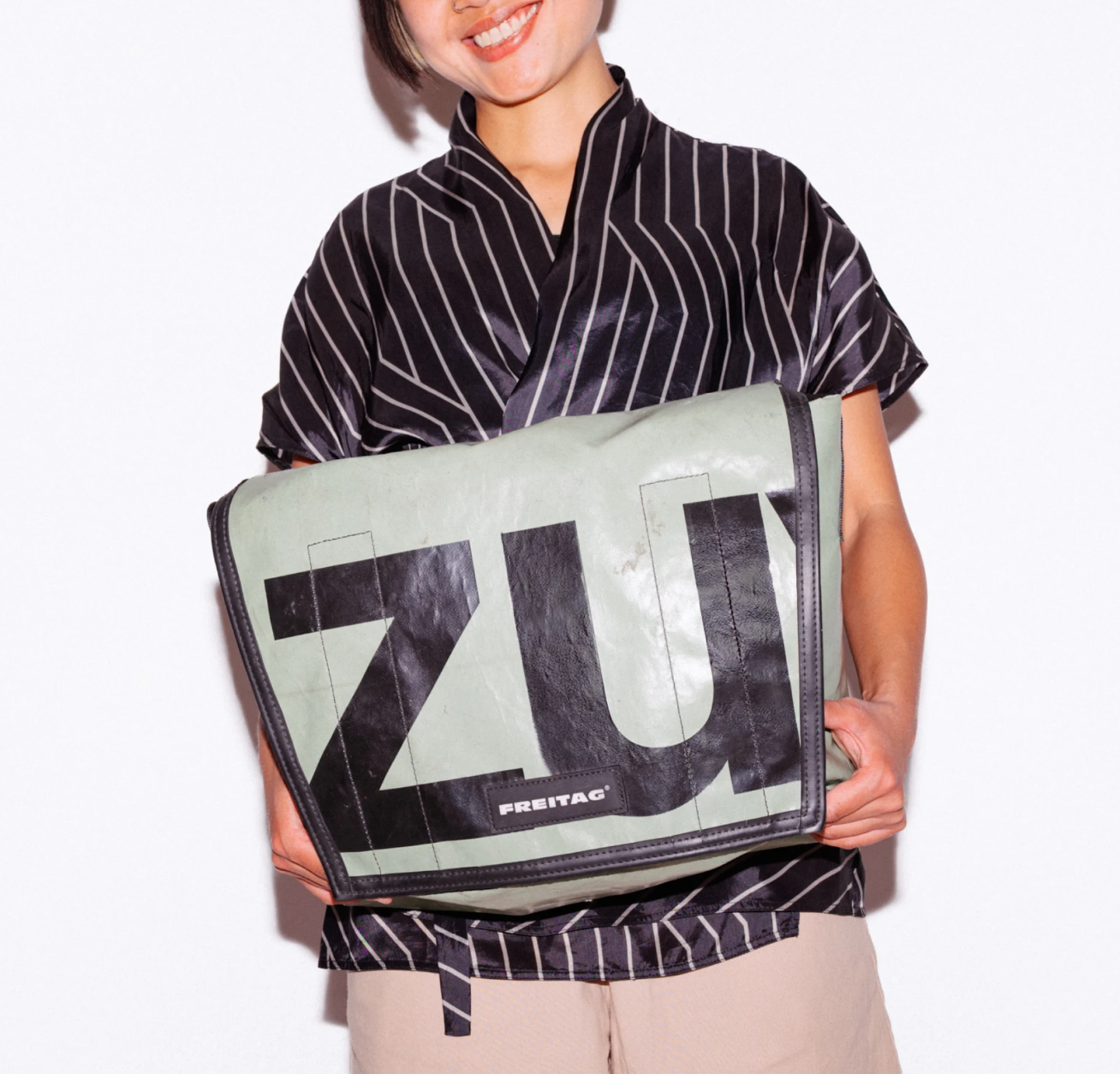
More than three decades later, FREITAG bags remain recognisable for a reason that has little to do with conventional luxury. Their colours, lettering and surface marks are inherited from the trucks on which their materials once travelled. No two pieces of tarpaulin age in quite the same way, so no two finished bags have exactly the same appearance.
In a market where products are often manufactured to look identical, FREITAG has turned variation into a selling point. Choosing one of its bags is less like selecting a colour from a catalogue and more like finding a particular object that happens to suit you. A faded blue panel, a fragment of lettering or an unexpected combination of red and white becomes part of its identity.
The question is how an industrial material becomes a desirable design object — and whether its unusual origins are enough to justify the price.
From discarded material to a designer bag
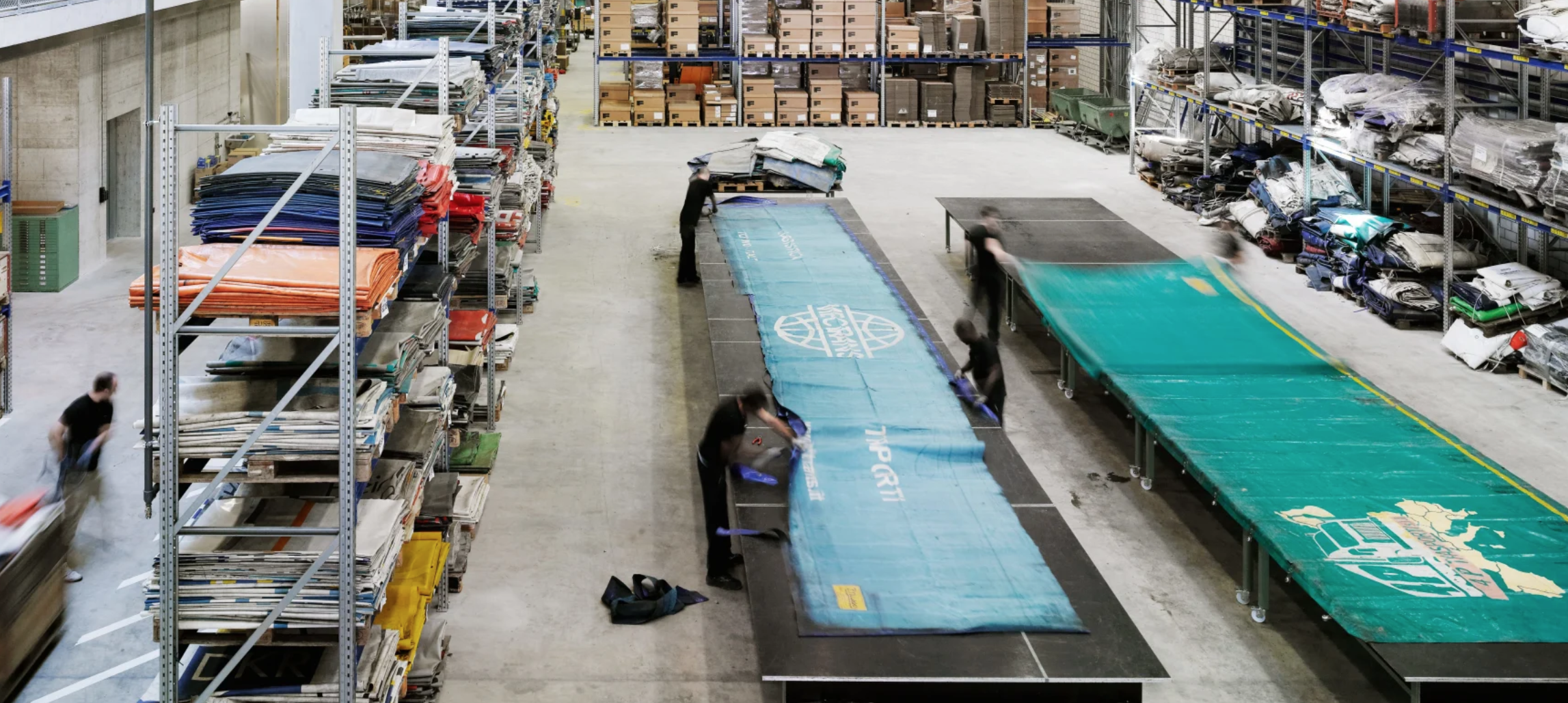
The transformation is more involved than it might first appear. FREITAG sources retired truck tarpaulins across Europe, then brings them to its Zurich headquarters for processing. The material is checked for harmful substances, dismantled, washed and sorted before it is cut into pieces for individual products. Designers and production teams work with the colours, marks and available surfaces of each tarp, while manufacturing partners turn the selected material into finished bags.
The process reverses the usual logic of fashion production. A conventional manufacturer might begin with a particular design, order fabric in a consistent colour and produce thousands of identical pieces. FREITAG starts with material that already exists. Its condition and markings influence the appearance of the final product.
This requires a different kind of design thinking. A section of tarp might have an attractive colour but an awkward crease; another might contain lettering that becomes an interesting feature when placed on a pocket. The designer cannot simply order another metre of the same material if something goes wrong. The available surface is part of the creative challenge.
The result is a bag with a history before its owner has even used it.
There is something appealing about this idea beyond its environmental credentials. We are accustomed to products whose value depends on being untouched, pristine and new. FREITAG begins with a material that has already been exposed to the world. Its scratches and faded areas are evidence of use rather than imperfections to be concealed.
The bag does not arrive with a blank identity. It arrives with a past.
Why FREITAG bags can cost hundreds of euros
FREITAG's approach raises an obvious question: if the main material has already been used, why are its bags so expensive?
The answer lies in the distinction between the cost of a raw material and the cost of turning it into a finished product. A discarded tarpaulin still needs to be sourced, inspected, cleaned, sorted and cut. The design must accommodate its individual characteristics, and the finished bag requires construction, hardware, quality control and distribution. Small variations in material also make conventional mass production more difficult.
Then there is the value of the product itself. FREITAG has spent more than thirty years building a recognisable design language around recycled and reclaimed materials. Customers are paying for the construction, the distinctive appearance, the brand's accumulated expertise and the knowledge that their particular bag is one of a kind.
The company's Reference collection brings this proposition into a more refined category. Launched in October 2026, it introduces four designs with cleaner silhouettes and a more understated aesthetic, while retaining the used truck tarpaulin that defines the brand. The collection includes the R201 ELLY, R202 BATES, R203 MAZIE and R204 NAN. Rather than hiding the material's previous life, the designs make its individual markings part of a more considered visual language.
The collection also puts the economics of upcycling into sharper focus. Premium pricing can seem contradictory when a product begins with discarded material. But the value of a designer bag is rarely determined by the price of its raw ingredients alone. Craftsmanship, design, labour and longevity all play a part.
That does not mean every upcycled product automatically deserves a luxury price. The more interesting question is whether the object offers enough quality and usefulness to justify what it costs.
Sustainability means keeping a bag in use
Reusing waste is only one part of the sustainability conversation. A product still requires energy, transport, manufacturing and packaging, and a recycled material does not automatically make the finished object environmentally responsible.
FREITAG's approach becomes more compelling when the focus shifts from how a bag is made to how long it can remain in use.
The company offers repair services for damaged bags, as well as replacement parts such as buckles, hooks and zip components. Its repair philosophy accepts the marks of age rather than insisting that a repaired bag should look new again. The aim is to restore its usefulness and extend its life.
The Reference collection takes this idea further by including a detachable repair kit made with material intended for future repairs. It is a small detail, but an important one: the bag is presented as something that will be carried, worn and eventually maintained, rather than replaced as soon as it shows signs of use.
This is where the story becomes relevant beyond FREITAG. We often discuss sustainable consumption in terms of what we buy, when the length of time we keep something matters just as much. A bag that remains useful for years has a different relationship with consumption from one replaced after a season.
It is a principle that applies to leather goods, furniture, clothing and almost any well-designed everyday object.
Eventually, the appeal of a FREITAG bag becomes less about the truck that carried its material and more about the life it joins. It goes to work, sits beneath a café table, catches the rain and carries the small collection of things that accumulate during an ordinary day. Its surface acquires new marks. A corner softens. The old lettering becomes part of a personal routine.
The material's first life does not disappear; it simply gains another chapter.
So how does an old truck tarpaulin become a designer bag worth hundreds of euros? Through a combination of resourcefulness, skilled production, distinctive design and a brand that has persuaded customers to see value in a material others might discard.
But the most interesting part is not the transformation itself. It is the idea behind it: that a product does not have to be flawless, newly manufactured or endlessly replaceable to be desirable.
A good bag carries your belongings. A more interesting one carries a little history, too.
Away from the noise.
Only the content that interests you, away from the noise and calm. Subscribe to our curated newsletter.