The French Work Jacket: A Piece of Clothing That Never Needed to Be Fashionable
There are clothes that become fashionable every few years and clothes that seem to exist outside fashion altogether. The French work jacket belongs to the second category.
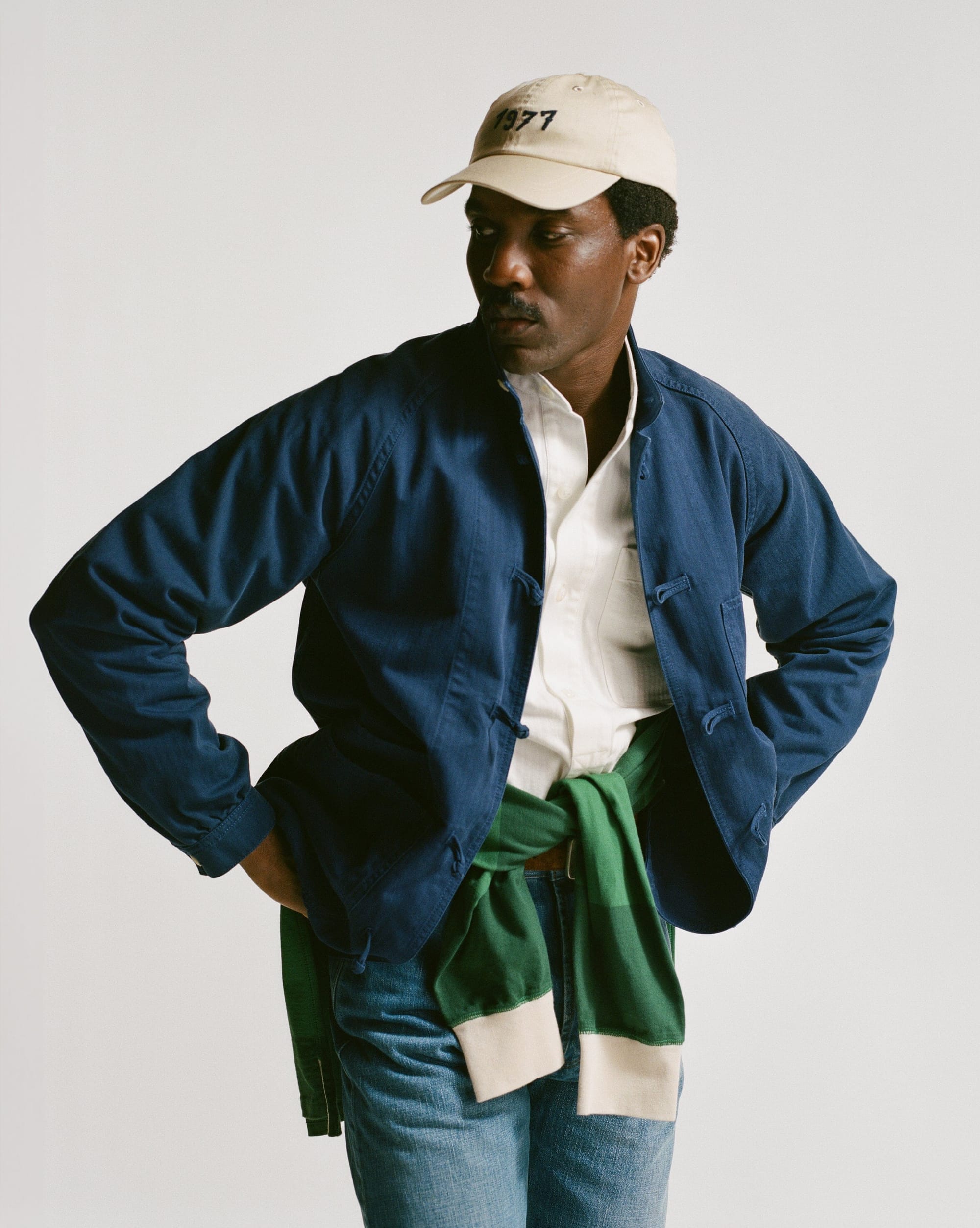
There are clothes that become fashionable every few years and clothes that seem to exist outside fashion altogether. The French work jacket belongs to the second category. It was never really designed to make a statement, which may be precisely why it has managed to make one for more than a century. Originally made for workers, painters, farmers, mechanics and craftsmen, the simple cotton or moleskin jacket has travelled a remarkable distance from the workshop to the wardrobes of designers, artists and people who simply appreciate a good piece of clothing.
In France, it is commonly associated with the bleu de travail — literally, the workman's blue. The name says almost everything. This was clothing made for getting things done, not for looking as though you were about to get things done. It needed to be comfortable, hard-wearing and easy to wash. The cut was uncomplicated: a short, straight body, a simple collar, large patch pockets and buttons down the front. There was very little to improve upon because there was very little that needed improving.
That practicality is part of its charm today. A French work jacket does not ask you to construct an outfit around it. Put it over a T-shirt in spring, over a shirt in autumn or under a heavier coat when the weather turns properly unpleasant. It works with jeans, wool trousers, chinos and, with rather less effort than most fashion pieces, the clothes you were already wearing.
Perhaps this is why it has survived so many changes in taste. Fashion likes novelty; good clothing likes repetition.
The history of the French work jacket is closely connected to the country's industrial and agricultural life. Different manufacturers produced their own versions, with variations in fabric, colour, pocket arrangement and cut. Some were made from sturdy cotton, others from moleskin, a dense brushed fabric that became particularly prized for its warmth and durability. The classic blue was practical too: it concealed dirt reasonably well while giving the garment an identity that became almost inseparable from French working life.
Over time, the jacket acquired another life. Artists began wearing it. So did architects, writers and intellectuals. It appeared in studios, workshops and cafés, gradually becoming associated with a certain kind of French creative life. The irony is rather nice: a garment created for people who had no particular interest in fashion eventually became one of the clearest expressions of a distinctly French approach to dressing.
The French work jacket has never looked overly concerned with itself.
That may be its greatest strength.
There is something particularly appealing about clothes that become better when they are used. A new work jacket can look almost too clean, too blue and too perfectly pressed. Give it a year or two and it begins to tell you something. The cuffs soften. The colour fades where your hands naturally reach for the pockets. The fabric takes on the shape of your shoulders. A few marks appear, hopefully from doing something interesting.
This is where the jacket separates itself from much of contemporary fashion. It does not need to remain pristine to retain its value. Quite the opposite. Wear is part of the design.
There is also something satisfying about its proportions. The jacket sits somewhere between a shirt and a coat, which makes it unusually useful during those frustrating European months when the weather cannot decide what it wants to be. In Paris, Copenhagen or Hamburg, there are weeks in spring when leaving the house without a jacket feels foolish but wearing a proper coat feels slightly dramatic. The bleu de travail solves the problem without making a fuss.
Its pockets are useful, too. This deserves mention because modern clothing has developed an unfortunate habit of including pockets that are technically present but practically useless. The French work jacket has never subscribed to this idea. Its generous patch pockets were designed to carry tools, pencils, cloths and whatever else a working person might need. Today they are more likely to contain keys, a phone, sunglasses and the receipt you promised yourself you would throw away.
Good design is often like this. You notice it most when it solves an ordinary problem.
The jacket's contemporary appeal also has something to do with its relationship to other forms of French design. France has long had a particular talent for making practical objects feel quietly elegant. A café chair, a market basket, a school notebook, a striped shirt or a simple glass can become recognisable without being decorative. The work jacket belongs to the same family. It is attractive largely because its appearance follows its purpose.
That does not mean every version made today deserves the same affection. There are modern interpretations that have become almost too polished, with carefully engineered fabrics, designer labels and prices that would make the original wearer wonder whether the garment had developed a serious misunderstanding about its occupation. The irony of paying a considerable sum for clothing originally valued precisely because it was affordable is difficult to ignore.
Still, there is room for both. The original and the refined version can coexist, provided the latter remembers where it came from.
For anyone looking to build a wardrobe rather than continually replace one, this is perhaps the most interesting lesson of the French work jacket. It does not depend on a particular decade, body type or fashion cycle. It has enough character to prevent an outfit from becoming anonymous, but enough restraint to avoid taking over the room.
It also improves with age, which is a quality we increasingly appreciate in objects and perhaps should appreciate more in clothes. A new jacket is simply new. An old one can become yours.
You begin to recognise the weight of it on a cool morning. You learn which pocket holds your keys. You stop noticing the faded patch on the sleeve. Eventually, someone asks where you bought it and you realise you have been wearing it for years.
That is a rather good definition of timeless style.
The French work jacket has survived not because it has successfully followed fashion, but because it never really joined the conversation. It was busy being useful.
Away from the noise.
Only the content that interests you, away from the noise and calm. Subscribe to our curated newsletter.