Why Everyday Objects Matter: The Design of a Better Life
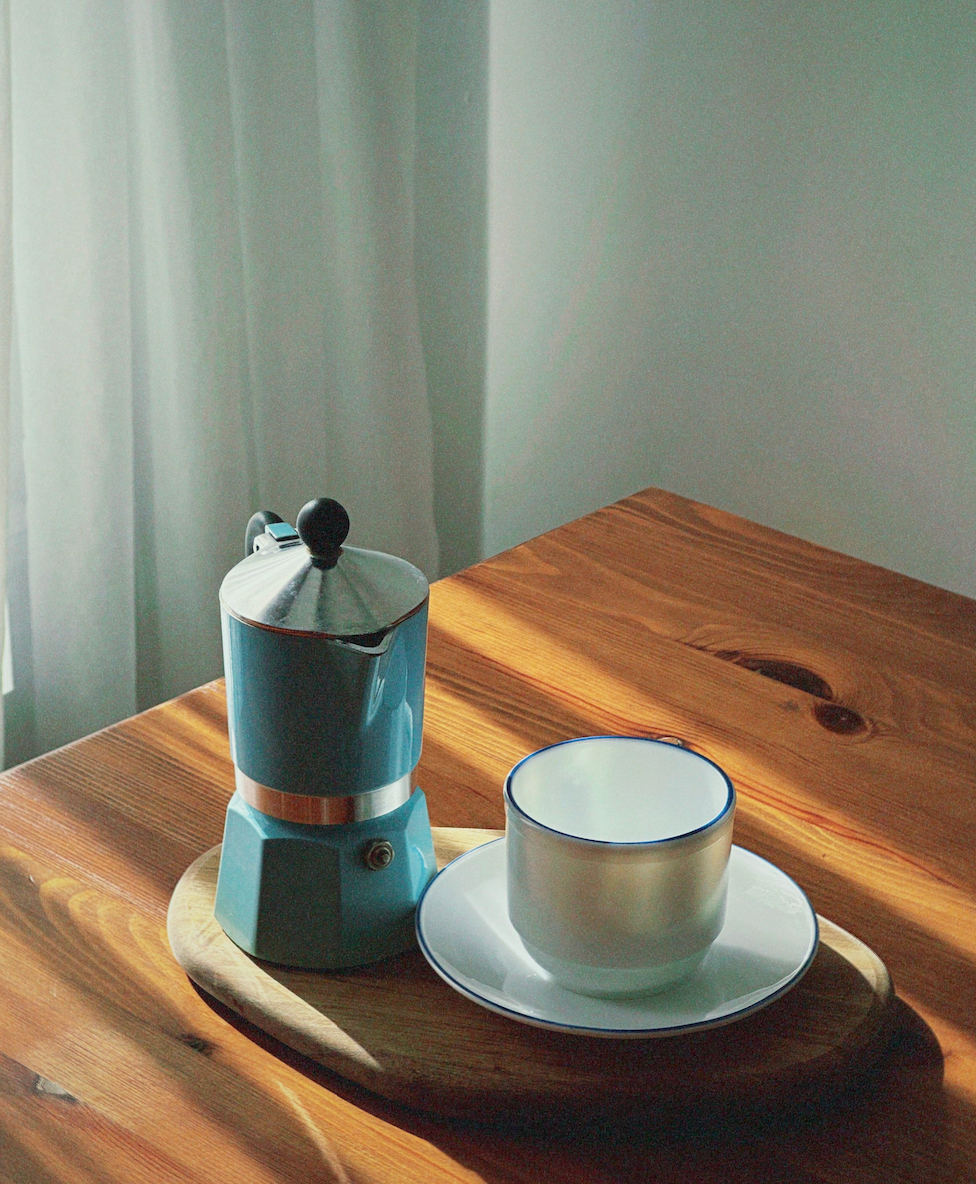
If you asked me what my favorite thing in my home was, I probably wouldn't say a chair or a lamp. It would most likely be something I use every day, something I barely notice anymore. A water glass in the kitchen, for example. It's a little heavy, the rim isn't perfectly finished, and I don't even remember where I bought it. I'm not sure whether I chose it because it looked better than the others on the shelf, or because my hand simply got used to it. But it's the one I reach for every morning.
I suppose this is how we begin to form a relationship with an object. First we choose it, then we use it, and then one day we realize we aren't really choosing it anymore. Our hand just goes to it. When we talk about design, we tend to think about the first part: form, material, color, proportion, the way something is made. All of that matters, of course. But what really determines an object's place in our lives is what happens afterward: how often we use it, how it ages, how little it gets in our way, and how familiar it eventually becomes.
I like the idea of a good object being somewhat quiet. It doesn't constantly call attention to itself. It does its job and steps aside. A drawer opens, a lamp comes on, a chair feels right, a knife cuts through a tomato without crushing it. We don't need to think too much about any of it. Maybe that's one of the nicest things about good design.
When you first pick up a new object, you tend to notice the material. Is the wood smooth? Is the leather stiff? Is the metal cold? Is the ceramic rough to the touch? A few years later, you notice different things. There's a scratch on the table, one corner of the chair has become slightly shinier, the handle of the leather bag has darkened, and there's a trace of limescale on the kettle that never quite disappears, no matter how often you clean it. We sometimes think of these things as flaws, but very often that's where the object begins to develop its character.
We used to place more value on things that stayed untouched. Now, when so many products are expected to look new for as long as possible, an object that has changed a little can feel more personal. Seeing the marks of time reminds us that it has actually been used. A chair still looking good after ten years is certainly important, but knowing that the same person has sat in that same chair, in the same home, for ten years is more interesting. At that point, the chair is no longer just a chair. It's become a small part of the history of the home.
An architect may determine the plan of a home, but the way life moves through it is often shaped by the objects inside. Where you leave your keys, the corner where you make coffee, the chair where a book gets opened every evening, the pair of shoes by the door that somehow never quite makes it back into the closet. These might look like details of decoration, but after a while they become the character of the home.
CH24 Wishbone Chair by Hans J. Wegner - Carl Hansen & Søn
That's why you can immediately sense the difference between a beautifully furnished space that has never really been lived in and a slightly messy home with a few old things and some empty corners. It's hard to explain exactly what the second place has. You just know someone lives there. One of the things I like about Apartamento is that it allows a person's life to remain in the photograph instead of preparing the room entirely for the photograph. A book can be left on the table. A chair can be pulled slightly to the side. A shelf doesn't have to be perfectly arranged. I think a real home needs a little disorder to look good, not because everything has to be out of place, but because you should be able to understand why everything is there.
In recent years, we've started paying attention again to things made by hand: ceramics, wood, textiles, leather, metal. None of these materials are new to us. What's changed is that we're looking at them again. Maybe that's partly because we're tired of things that all look the same. You don't need a large label to tell you that a cup was handmade. A slight asymmetry can be enough, a tiny difference where the handle meets the body, a variation in the glaze, the grain of the wood refusing to look exactly like the next piece. These are small details, but they suggest that the object came from somewhere: from a person, from a workshop, from a particular material, from a particular way of making things.
I think that's part of what gives an object value now. It's no longer enough for something to simply look good. We want to know where it was made, why it was made that way, and how long it might last. Maybe that's what quality is becoming: something more tangible, the sense that there was a thought behind the object.
I used to think good taste had a lot to do with what you owned. A beautiful chair, a good watch, a good jacket, a beautiful home. Eventually, I started thinking it had more to do with what you chose. Because once you start liking everything, you haven't really chosen anything. You can have twenty beautiful objects in a room, but if they were all bought recently, if they're all flawless, and if none of them has had time to become part of a life, the room can still feel anonymous.
A few things that have been there for years can tell you much more. You know why the chair is still there. You know why the lamp hasn't been replaced. You know why that jacket comes out of the closet every winter. They all have a story. It doesn't have to be an important one. In fact, it's usually very ordinary. But it's yours. I think good taste has something to do with that: knowing what you love, but also knowing why you keep it.
So many of the objects around us today are designed to capture our attention. Phones, screens, cars, stores, sometimes even homes. Everything seems to have something to say, which makes it harder to notice the quiet things. Think about a drawer pull. Your hand reaches for it every day, but you may never have really looked at it. And yet its shape determines how your hand approaches it. The light from a table lamp changes the way an evening feels. The weight of a glass changes the way you hold it.
Good design has these small effects. It doesn't have to tell us anything important. It simply becomes part of the day. And maybe that's why some things stay with us for so long. Because they never ask too much of us.
The more I think about it, the less I believe good design is actually about objects. It's more about habits: using something in the same way every day, keeping something for years, not replacing it the moment it shows its age, letting a material change with time. You don't need to own very much to do any of this. Sometimes the opposite is true. A home where only the things you genuinely use remain can feel better simply because of that. More importantly, it can tell you something about how you live.
Maybe that's one way to think about a well-designed life. Not that everything has to be beautiful, but that the things around you should feel familiar. That your hand reaches for the same glass in the morning, that you still sit in the same chair years later, that you turn on the same lamp as the light begins to fade in the evening.
These are very small things. But most of life is made up of them. And maybe, one day, understanding what a well-designed life looks like won't require buying anything new at all. Maybe it will simply mean paying a little more attention to the things we use every day.
Photos: Pexels, esrannur, Carl Hansen & Søn
Away from the noise.
Only the content that interests you, away from the noise and calm. Subscribe to our curated newsletter.